
This page is for someone who has already decided to make a first purchase and wants to do it deliberately. If you haven't decided yet, read crypto risks first — it's a short read and it changes how you should size this step. If you're still working out what any of this is, start with what Bitcoin is.
Decide these four things before you spend a dollar
Do this before you open any account, because the answers determine which platform fits and how much you should put in.
- How much, and why that amount? The honest rule: only money you can lose entirely. Bitcoin is volatile — large percentage drops are a normal part of its history, not an anomaly. If a 50% drop would force you to sell at the worst moment or cause real financial strain, the amount is too big. Many first-time buyers start small on purpose, to learn the mechanics with limited risk.
- What are you actually doing with it? Buying and holding long-term, making recurring purchases, or trading? The answer changes which fee structure matters most. If you'll hold, the exchange you buy on matters less than where you store it.
- Where do the coins live afterward? On the exchange (custodial — they hold the keys) or in your own wallet (self-custody — you hold the keys)? This is the single most important decision, and we treat it as the first question. We explain the tradeoff in how crypto wallets work.
- Do you trust the platform you're about to use? Check its security history, how it handles customer funds, and whether it makes withdrawals to your own wallet easy. A platform that makes it hard to move your coins out is a red flag.
The actual steps
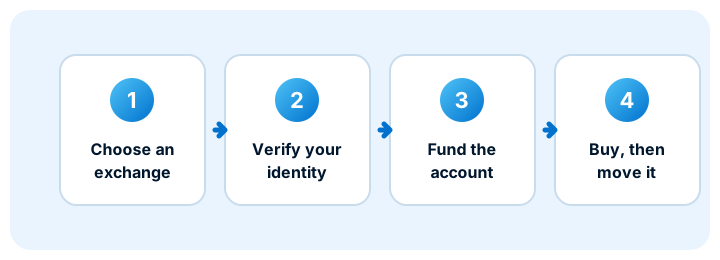
- Choose a regulated exchange. In the United States, use an exchange that is legally permitted to operate where you live and that requires identity verification. The two most common for a first purchase are Coinbase and Kraken; we compare them in our criteria-based shortlist and in Coinbase vs Kraken. Verify current availability for your state or country on the official site before investing time in setup.
- Create an account and complete verification. You'll provide identity documents (KYC is required at regulated US exchanges). This can take minutes to a few days. Keep your documents handy.
- Link a funding source. Typically a bank account or debit card. Note the deposit method's cost and timing — some methods are instant but pricier, others free but slower. See crypto fees explained for what each fee type is.
- Place the buy order. You'll choose an amount (in your local currency) and the platform converts it to Bitcoin at the current price, minus fees. For a first purchase, a simple "market" order (buy at the current price) is the least confusing option. Watch the fee the platform shows before you confirm.
- Confirm the coins arrived in your exchange account.
- If you plan to hold, move them to a wallet you control. This is optional for a tiny first purchase but is the durable protection for anything you intend to keep. We walk through the transfer safely in moving crypto to a hardware wallet, and the security basics in protecting your recovery phrase.
The fees you'll actually meet
A $100 purchase is rarely a $100 purchase. Three costs can apply, and they hide in different places:
- A spread or trade fee. The gap between the market price and what you pay, or an explicit percentage fee. This is the one to watch on every order.
- A deposit or payment-method fee. Some funding methods (like instant card purchases) carry a fee; bank transfers are often free but slower.
- A network fee when you later send coins to your own wallet — this pays the blockchain, not the exchange, and varies with network congestion.
The exact numbers change and differ by platform. We won't quote a specific exchange's current rate here, because it moves — check the fee schedule on the platform's official page the day you buy. To work your own numbers, use our fee calculator with each platform's current rates.
Protect yourself from the most common first-purchase mistakes
- Only use the official site. Type the address yourself or use a link you've verified; never follow a link in an unsolicited message or a search ad you didn't expect. Bookmark the real site before you need it.
- Enable two-factor authentication and, where offered, use an authenticator app rather than SMS.
- Don't share your recovery phrase with anyone. No support agent, no "recovery" service, no website needs it. If something asks for it, that's the scam.
A worked example: a $100 first purchase
Here's what a small, deliberate first purchase looks like, with the fee logic made explicit (using placeholder rates — substitute the platform's actual current numbers):
| Step | Example cost | What it is |
|---|---|---|
| Bank transfer in | $0 | Free, but may take 1–3 days |
| Buy $100 of Bitcoin | ~$1–$3 (a 1–3% fee or spread) | The trade cost — the number to check before confirming |
| Send to your own wallet | network fee (varies) | Pays the blockchain; not the exchange |
The takeaway isn't the exact dollars — it's that the total cost of a first purchase is the deposit fee + the trade fee + the network fee, and the trade fee is the one that differs most between platforms. If you plan to keep buying, that recurring fee is where the recurring-buy calculator becomes useful.
Frequently asked questions
How little can I start with?
Most regulated exchanges let you buy a small amount — often from a few dollars or a few tens of dollars up. There's no "right" minimum; the point of a small first purchase is to learn the mechanics with limited risk. Size it so that a 50% drop would be an education, not a hardship.
Should I buy on an exchange or straight to a wallet?
For most people, buy on a regulated exchange (it's the easiest way to convert from your bank) and then move the coins to a wallet you control if you plan to hold. You can't "buy straight to a wallet" with a bank card in one step — the exchange is the on-ramp, the wallet is the safe.
Is my money protected if the exchange fails?
Not in the way a bank deposit is. Exchange protections are not deposit insurance, and while your coins sit on an exchange, the exchange holds them. This is the core custody risk, and the reason we treat "where do my coins sleep" as the first question — see wallets explained.
Do I owe taxes on this?
In the United States, cryptocurrency is treated as property, and buying, selling, and using it can create tax events many beginners don't expect. We outline the basics in crypto tax basics — but that page is a general education, not personalized advice. Keep records from day one, and consult a qualified tax professional for your situation.
Where to go next
Once you've made the purchase, the next steps that protect it: how wallets and custody work, protecting your recovery phrase, and staying ahead of the scams. And when you're ready to keep buying, the recurring-buy calculator helps you see what a steady strategy would look like.