
Use the calculator
Runs entirely in your browser. No account, no wallet connection, no data sent anywhere.
How to read the result
- Total contributed is simply your amount times your number of periods — the money you actually put in.
- Projected value is what that stream of contributions would be worth at the end, grown at your assumed return. The formula compounds each contribution from the point it was made, so earlier contributions have more time to grow.
- Projected gain (or loss) is the difference. At a 0% assumption it's zero by definition — the value equals what you contributed. Move the return up or down to see how sensitive the outcome is.
Frequently asked questions
What return should I put in?
Whichever assumption you want to test. 0% isolates the effect of your contributions. A positive number shows optimistic growth; a negative number shows drawdown. The point is to see how much the outcome depends on an assumption you can't actually know — which is the whole reason to keep any position sized to what you can afford to lose.
Does this account for fees?
No. Real recurring purchases also incur fees on each buy, which would reduce the net amount invested. To estimate that, see our fee calculator and apply it per purchase. The DCA figure here is the gross, before fees.
Is DCA better than a one-time purchase?
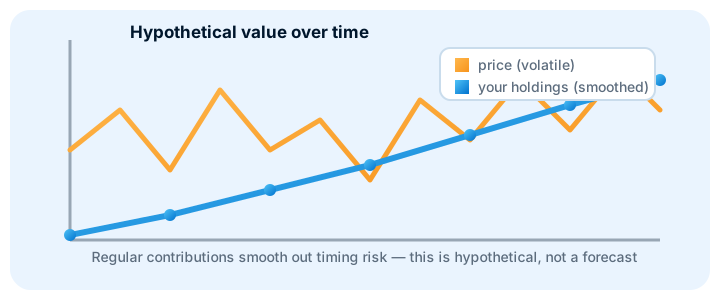
There's no universal answer. DCA smooths timing risk; a one-time purchase is simpler and, over very long horizons, the average outcome of the two is similar because you can't control prices. Choose based on your comfort with volatility, not on the idea that one is "safer" in a guaranteed sense.
Where to go next
Pair this with how to make a first purchase, estimate your per-purchase cost with the fee calculator, and keep the bigger picture in view with crypto risks.